By Mindy Mazur
Peep-O-Rama: A Slightly Chaotic Family Tradition (That Turns Out to Be Great Team Building)
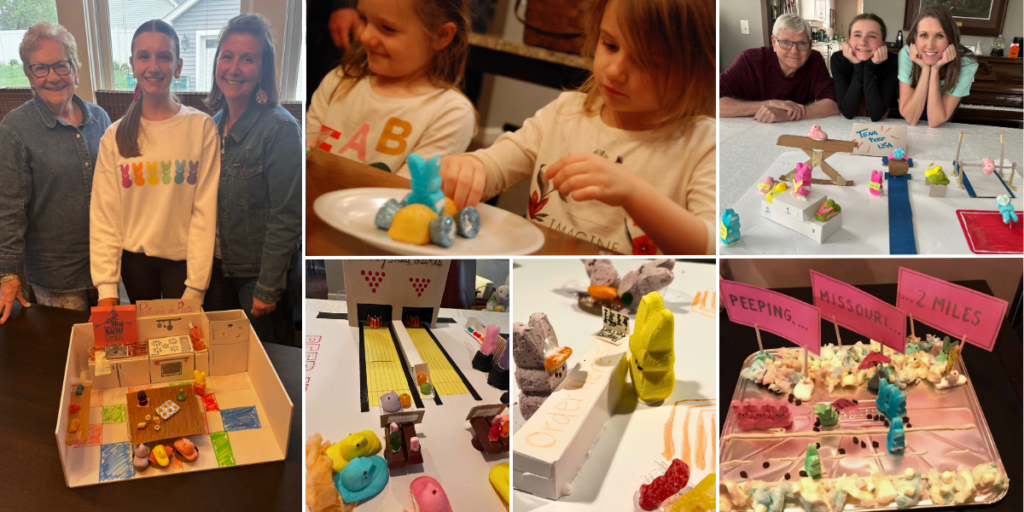
There are people who simply eat Peeps, and there are people who turn them into full-blown dioramas.
My family… does the second.
What started years ago as a fun Easter activity has turned into an annual tradition: “Peep-O-Rama”. It’s a little messy, a little ridiculous, and something we all look forward to every year.
It’s also, somewhat unexpectedly, a really good reminder of what makes teams work.
Where It All Started
We were already big fans of the Washington Post Peep Show…the creativity, the detail, the commitment to turning marshmallow candy into high art.
At one point when we were in D.C., my husband and I even got to see the displays in person, which only reinforced the idea that this was something worth trying ourselves.
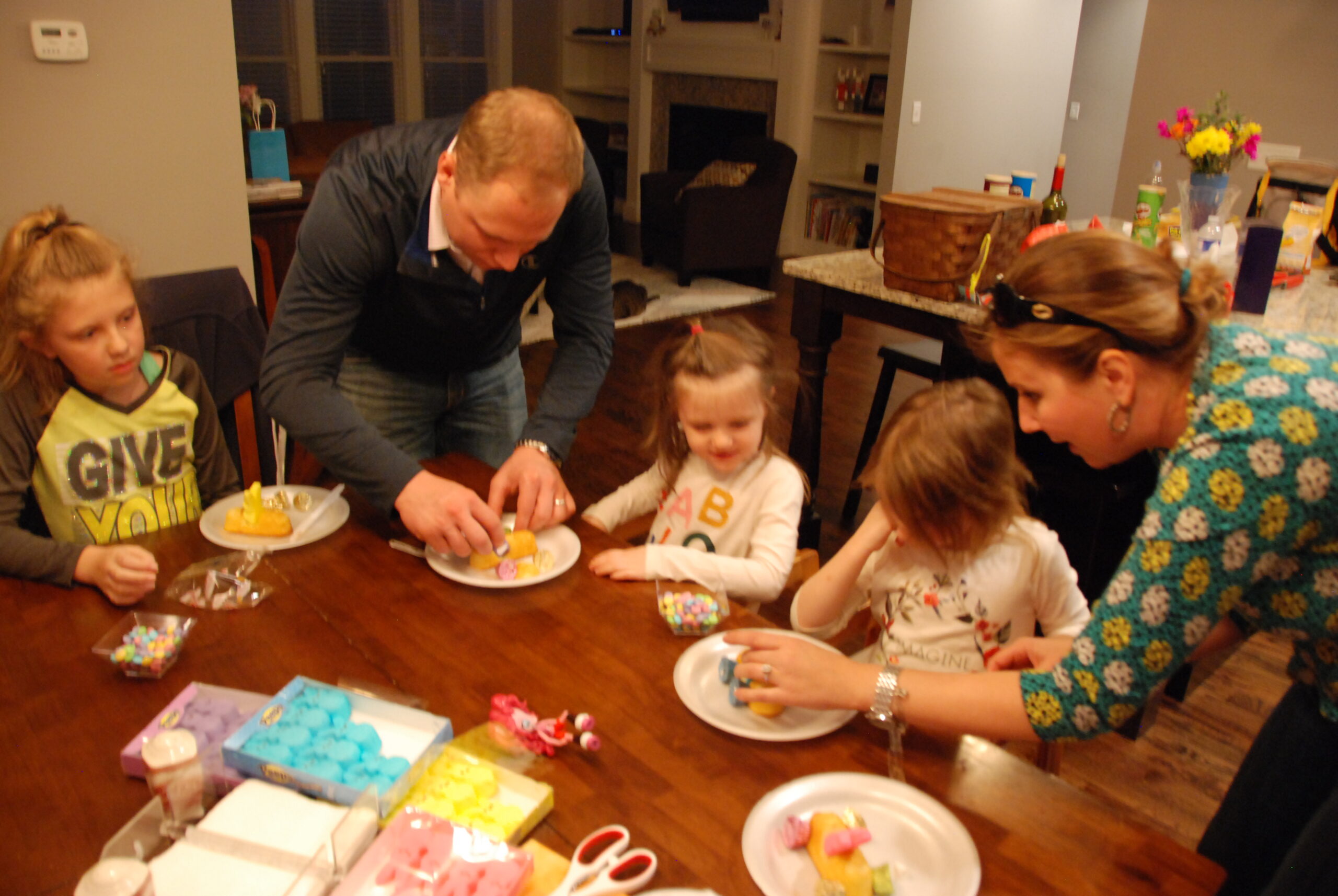
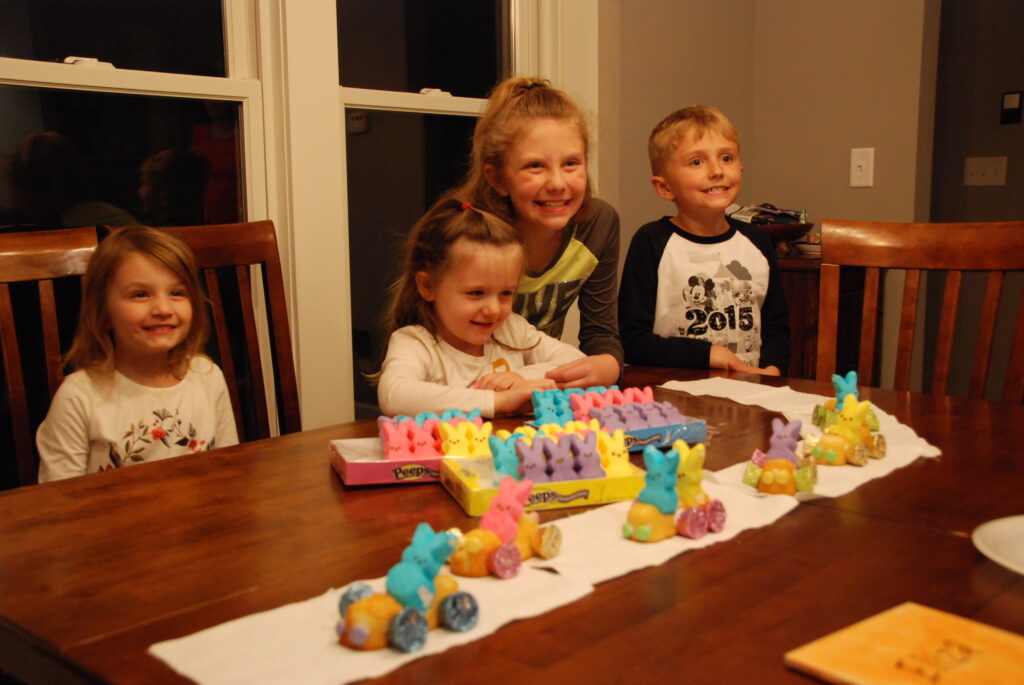
The first real attempt came in 2016, when my super-fun sister-in-law Maryann showed up with Peeps and supplies and introduced the concept through one very specific lens: Peep race cars.
That was it. That was the activity.
But like most things, it didn’t stay that simple for long.
Year by year, it evolved and eventually became what we now call Peep-O-Rama.
And we’ve definitely “optimized” it over time:
- Better team structure
- Better prompts
- Better use of materials (including the discovery that stale Peeps are superior building tools)
What started as a one-off idea is now a repeatable system. (Apparently, you can’t fully turn off the operational excellence mindset – even with marshmallows on a holiday weekend.)
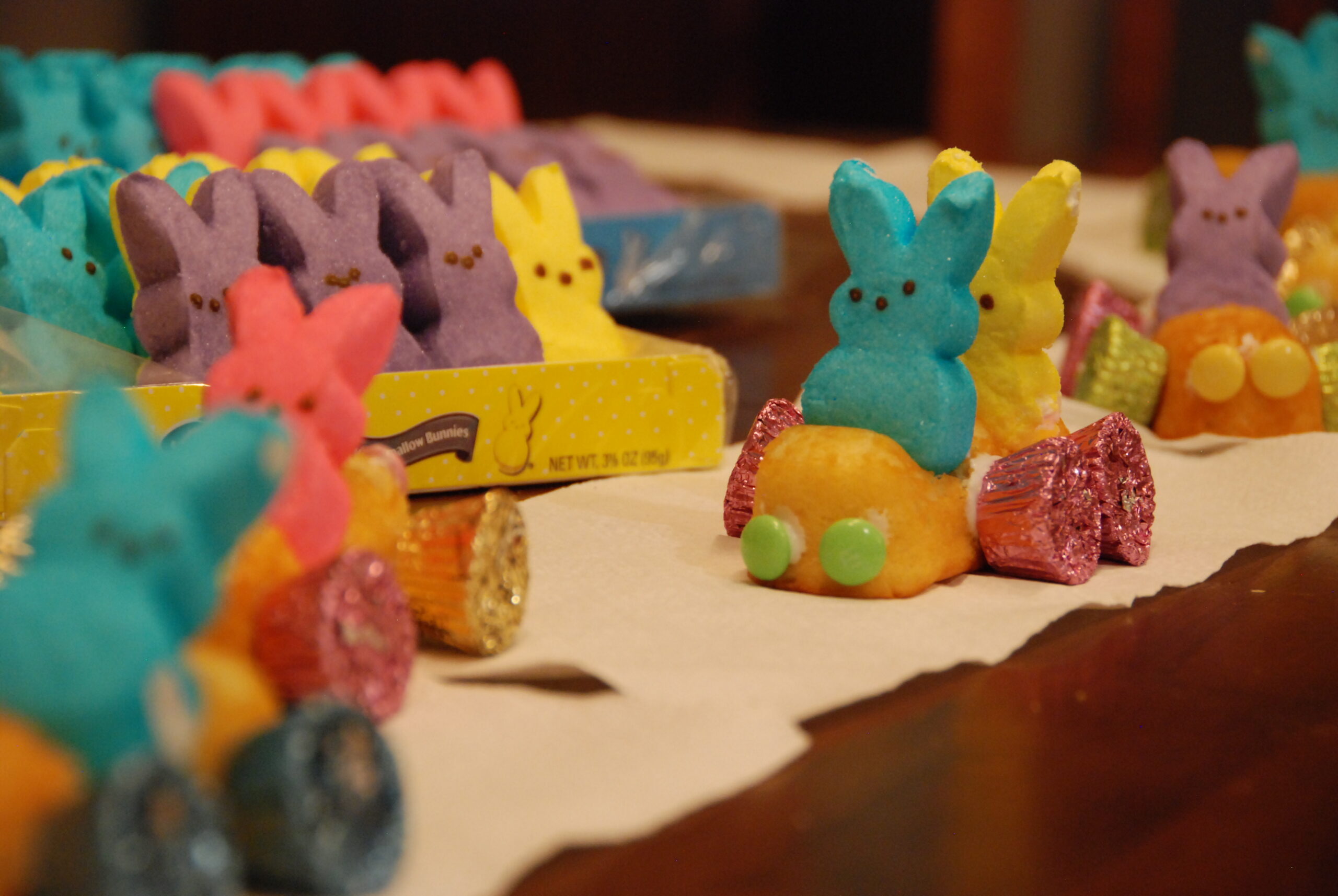
The fastest Peeps on this side of the Mississippi River
How It Works (a.k.a. Organized Chaos)
If you want to try this at home – or with a team – here’s the basic playbook.
1) A week or two before
A little prep, easy-peasy:
- Confirm who’s coming
- Start collecting materials you’d normally recycle (boxes, egg cartons, random packaging)
- Pick up Peeps (open some packages to get a little stale), other candy, and frosting (which doubles as glue… and yes, it works surprisingly well)
2) Day of: Build your teams
This is one of my favorite parts.
We’ve learned that mixing generations makes it better – so:
- The youngest kids are the team captains
- Then we draw names from different generations to build out each team
You end up with teams that have intentional generational diversity, which we’ve learned is key to unlocking maximum creativity and fun for everyone!
3) Pick a theme (with one important rule)
Everyone throws ideas into a bowl and we draw one.
Key lesson from experience:
The theme needs to be broad enough to allow creativity.
“Musicals”? Great.
“Cartoons”? Also great.
“Godzilla vs. Kong”?
…less great. (We had multiple nearly weirdly identical scenes that year. Lesson learned.)
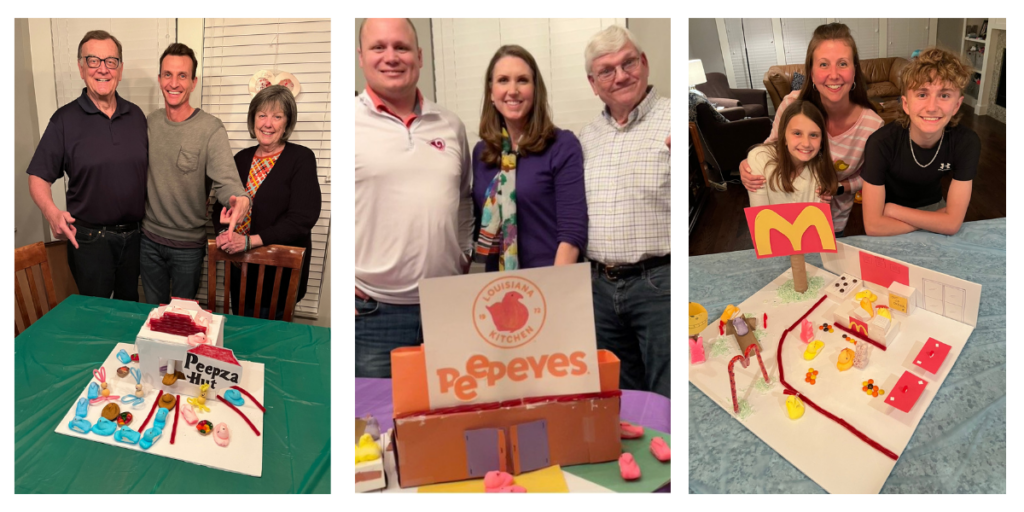
Fast-Casual Peeps
4) Pick your team’s spin on it
Once the overall theme is set, each team has a few minutes to decide how they want to interpret it.
For example:
- If the theme is “cartoons,” one team might go with Peep-Eye, another with SpongeBob SquarePeeps
Teams share their idea out loud before they start building – just to make sure we don’t accidentally end up with duplicates.
6) Build (1 hour)
Each team gets:
- A base
- Peeps
- Frosting
- Access to all the random supplies
Set a timer for an hour and let people run with it.
Some teams plan. Some don’t.
Some structures hold. Some… definitely don’t.
Also: there is a lot of candy consumption during this phase. Can you say, “sugar shock?!”
7) Presentations (the best part)
At the end, each team shares what they made.
We clap. We laugh. We admire the creativity.
And importantly – this is not a competition.
No judging. No winners. Just appreciation.
8) After
We usually leave the dioramas out for Easter Day… and then eventually dismantle them (which is also part of the fun).
We keep a box of leftover supplies – including stale Peeps – for next year. Those actually work best.
What I’ve Learned From Peeps
When Camille and I were discussing what should be our Mazur & Co. blog topic this month, Peep-O-Rama was fresh on my mind, and I realized this slightly chaotic tradition actually has a lot to say about how teams work.
A few things show up every single time:
- Different perspectives make everything better
When you mix ages (or backgrounds, or roles), the ideas get more interesting – fast. - A little structure goes a long way
You need just enough:
- A theme
- A time limit
- Some basic rules
After that, people take it in fantastical directions you never could have imagined.
- Leadership isn’t always who you expect (and youth voice matters)
Letting kids lead as “team captains” changes the dynamic in the best way. They’re decisive, creative, and not overthinking it.
- People loosen up when it’s not a competition
Take away “winning,” and suddenly people are more collaborative, more creative, and a lot more willing to try something new. - Constraints actually help
An hour. A pile of random materials. A shared theme.
That’s where the good stuff happens.
From Peeps to Practice
Turns out, the Peep-O-Rama organizational design isn’t all that different from how we think about team experiences at Mazur & Co.
Not the Peeps part (usually)… but everything else.
When we’re facilitating a retreat or working with a team, we’re thinking about the same things:
- How do you create just enough structure so people can do their best thinking?
- How do you bring together different perspectives in a way that actually works?
- How do you make space for creativity, without it turning into chaos?
The goal is to create the kind of environment where people:
- show up differently
- collaborate more openly
- and come up with ideas they wouldn’t have landed on otherwise
I’m actually facilitating a strategic retreat this week, and while we won’t be building Peep dioramas, the principles are exactly the same.
If You Want to Try This…
You don’t need Peeps.
You don’t need Easter.
You don’t need anything elaborate to build a strong team experience.
Just:
- a clear structure
- a shared challenge
- a mix of people
- and a little room for things to get messy
You’ll be amazed at what can be created, together.